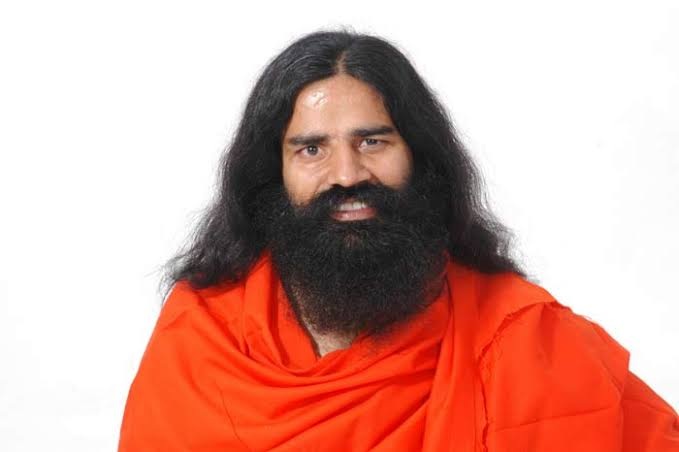
Baba Ramdev is one of India’s most recognisable yoga gurus and the co-founder of the Patanjali Ayurved business empire, and questions about baba ramdev net worth are among the most searched financial queries in India today. Because Ramdev is a Hindu monk (sanyasi) who has publicly stated he holds no personal property,
estimating baba ramdev net worth in rupees is genuinely difficult — public estimates range widely, from roughly ₹1,000–1,100 crore (about $120–135 million) on the conservative end to multi-billion-dollar figures when analysts value the entire Patanjali ecosystem he built rather than personal assets in his name. This article lays out what is verifiably known about his life, career, and the disputed baba ramdev net worth figures reported across financial media, along with his age, family, religion, and biography.
Table of Contents
Quick Facts Summary
| Field | Details |
|---|---|
| Full Name | Ram Kisan Yadav (also spelled Ramkishan Yadav) |
| Nickname | Baba Ramdev / Swami Ramdev |
| Date of Birth | 25 December 1965 (widely cited; some records place his birth between 1965–1975) |
| Age | 60 years (as of 2026) |
| Birthplace | Sayad Alipur village, Mahendragarh district, Haryana, India |
| Nationality | Indian |
| Zodiac Sign | Capricorn |
| Religion | Hinduism |
| Marital Status | Unmarried (took monastic vows/sanyas) |
| Children | None (as a sanyasi, he has no wife or biological children) |
| Known For | Popularising yoga and pranayama in India; co-founding Patanjali Ayurved |
| Net Worth | Estimated between ₹1,000 crore and several billion dollars (disputed; see below) |
Personal Information
Because Ramdev renounced worldly life as a young man, several conventional “celebrity profile” details simply are not publicly documented or do not apply to him the way they would to an actor or businessman. Rather than guess, here is what is reliably reported:
| Attribute | Detail |
|---|---|
| Full Legal Name | Ram Kisan Yadav |
| Monastic Title | Swami / Baba |
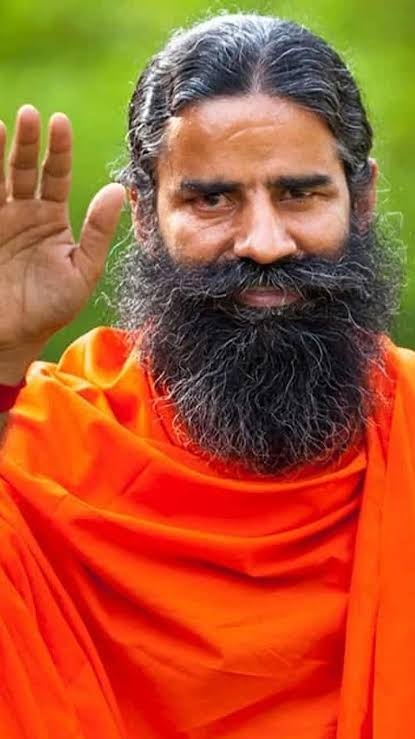
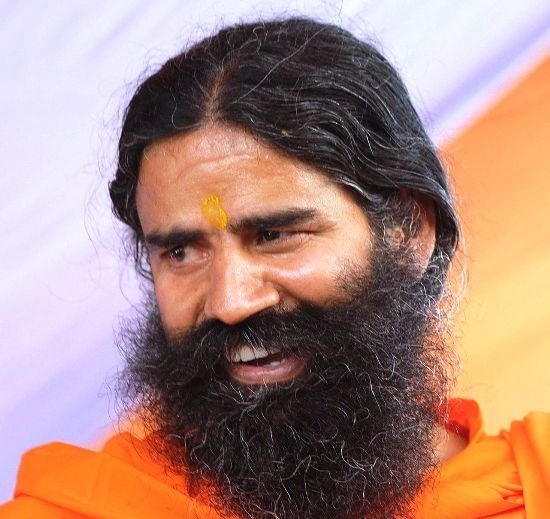
| Distinguishing Feature | Partial paralysis on the left side of his face, present since childhood |
| Dress Style | Traditional saffron-coloured robes (the attire of a Hindu ascetic) |
| Public Persona | Yoga instructor, spiritual teacher, and entrepreneur |
| Height, Weight, Eye/Hair Colour | Not officially disclosed in verified biographical sources |
Family & Personal Life Background
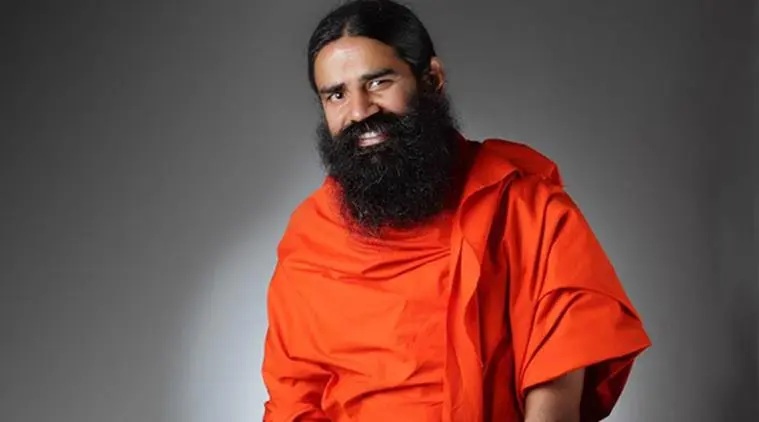
Family Heritage & Ancestry
Ramdev’s roots are agrarian and modest, a background he frequently references in his public talks about self-reliance and hard work.
| Family Member | Relationship | Details |
|---|---|---|
| Ram Niwas | Father | A farmer in Haryana, described as illiterate |
| Gulabo Devi | Mother | Homemaker, also from a farming background |
| Elder Brother | Sibling | Referenced in biographical accounts, limited public detail |
| Younger Brother | Sibling | Referenced in biographical accounts, limited public detail |
| Younger Sister | Sibling | Referenced in biographical accounts, limited public detail |
| Acharya Balkrishna | Long-time associate (not blood relative) | Co-founder of Patanjali Ayurved and its majority shareholder; often described as Ramdev’s closest collaborator |
Because Ramdev formally embraced sanyas (Hindu monastic renunciation), he does not have a wife or son in the conventional sense — a fact directly relevant to anyone searching for baba ramdev wife or baba ramdev son. His public identity is built around celibacy and renunciation of personal family life in favour of a spiritual and public-service role.
Personal Life Philosophy
Ramdev’s personal philosophy centres on the idea that physical discipline — yoga, pranayama, and Ayurveda — is the foundation for a productive life, whether for an individual farmer or a national economy. He often frames his own recovery from childhood paralysis through yoga as the founding story of his life’s mission.
He has repeatedly stated that he does not consider himself personally wealthy, arguing that the assets connected to his name are held by trusts and institutions such as the Divya Yog Mandir Trust and Patanjali Ayurved, not by him privately. This distinction is central to any honest discussion of baba ramdev net worth, since it separates his personal claimed wealth from the market value of the organisations he leads.
His broader life philosophy blends nationalism (the “Swadeshi” or self-reliant India movement), traditional Ayurvedic medicine, and mass-market yoga education, aiming to make wellness practices accessible to ordinary Indians rather than an elite few.
Educational Journey
Schools & Early Education
| Level | Institution | Location | Years (Approx.) | Notes |
|---|---|---|---|---|
| Early Childhood | Local village schooling | Alipur, Mahendragarh, Haryana | Late 1960s–1970s | Limited formal schooling reported; childhood affected by paralysis |
| Gurukul Education | Traditional gurukul (Sanskrit and Yoga studies) | Haryana region | 1970s–1980s | Studied Sanskrit scripture and yogic practices |
Higher/Spiritual Education Deep-Dive
| Institution Type | Focus | Years | Activities/Outcome |
|---|---|---|---|
| Gurukul (traditional monastic school) | Sanskrit, yogic philosophy, scripture | 1980s | Trained under traditional teachers rather than a conventional university system |
| Self-directed Ayurvedic study | Ayurveda and herbal medicine | 1980s–1990s | Formed the intellectual basis for later Patanjali product development |
Ramdev did not follow a conventional college/university path; his “education” is rooted in gurukul-style religious and yogic training, which is an important distinction from typical corporate biographies and a common point of confusion in online profiles.
Career Timeline
Year-Wise Career Progress
| Year | Approx. Age | Position/Milestone | Key Achievement |
|---|---|---|---|
| 1995 | 30 | Founder | Established the Divya Yog Mandir Trust |
| 2002 | 37 | Yoga Instructor | Began large-scale public yoga camps across India |
| 2003 | 38 | TV Personality | Started televised yoga programs on Aastha TV, reaching millions of households |
| 2006 | 41 | Co-founder | Launched Patanjali Ayurved and Patanjali Yogpeeth with Acharya Balkrishna |
| 2011–2012 | 46–47 | Activist | Led high-profile anti-corruption protests and campaigns against undeclared foreign wealth |
| 2013 onward | 48+ | Business Expansion | Patanjali expanded aggressively into FMCG categories — food, personal care, and household products |
| 2019 | 54 | Institution Builder | Patanjali Ayurved acquired Ruchi Soya (later renamed Patanjali Foods), significantly expanding the group’s scale |
| 2022 | 57 | Public Recognition | Listed among India’s most powerful public figures by national media |
| 2024–2026 | 59–60 | Continued Leadership | Remains the public face and brand ambassador of the Patanjali group amid regulatory and legal scrutiny over product claims |
Career Phase Highlights
Yoga Teacher Phase (1995–2002)
- Founded the Divya Yog Mandir Trust as a base for yoga instruction
- Built a grassroots following through free yoga camps in villages
- Focused heavily on pranayama (breathing techniques) as his signature teaching method
Television and Mass Popularity Phase (2002–2006)
- Brought yoga into millions of Indian living rooms via daily TV broadcasts
- Built personal brand recognition that later fuelled Patanjali’s marketing
- Attracted large public gatherings, sometimes exceeding tens of thousands of attendees
Business Expansion Phase (2006–Present)
- Co-founded Patanjali Ayurved, which grew into a major Indian FMCG conglomerate
- Diversified into food products, personal care, cosmetics, and clothing (Patanjali Paridhan)
- Oversaw the group’s move into publicly listed entities through Patanjali Foods
Major Achievements & Awards
Year-Wise Awards
| Year | Recognition | Organisation | Significance |
|---|---|---|---|
| 2009 | Chief Guest Honour | Jamnalal Bajaj Foundation | Recognised for contribution to public health through yoga |
| Various | Honorary Doctorate | Kalinga Institute of Industrial Technology (KIIT), Bhubaneswar | Acknowledged his role in popularising yoga and Ayurveda |
| 2022 | Ranked among India’s most powerful individuals | The Indian Express Power List | Listed at 78th position, reflecting his national influence |
Net Worth Without Charity (If Applicable)
A recurring search term is baba ramdev net worth without charity, referring to what his wealth might look like if the assets held by trusts, the Divya Yog Mandir Trust, and charitable/educational arms of Patanjali were excluded. Because Ramdev does not personally hold equity in Patanjali Ayurved — ownership sits overwhelmingly with Acharya Balkrishna (reported at roughly 94% of the flagship entity) — his individually attributable, non-institutional wealth is generally estimated by financial commentators to be in the lower range of public figures,
often cited around ₹1,000–1,100 crore ($120–135 million), rather than the multi-billion-dollar figures sometimes used to describe the value of the broader Patanjali empire. This makes the “net worth without charity” framing somewhat moot in his case, since he has consistently maintained he owns little to nothing in a personal capacity.
Investment Philosophy & Financial Principles
- Prioritises institution-building over personal accumulation of assets
- Channels commercial profits from Patanjali entities into trusts supporting education, Ayurvedic research, and yoga training
- Publicly promotes “Swadeshi” investment — supporting Indian-made and Indian-owned businesses
- Avoids personal branding of assets; properties and businesses are typically registered under trusts or under Balkrishna’s name
- Emphasises self-reliance (health and financial) as a life philosophy rather than pure profit maximisation
Administrative Positions & Organisational Leadership
Chronological Positions
| Period | Role | Organisation |
|---|---|---|
| 1995–Present | Founder/Spiritual Head | Divya Yog Mandir Trust |
| 2006–Present | Co-founder & Brand Ambassador | Patanjali Ayurved |
| 2006–Present | Co-founder | Patanjali Yogpeeth |
| 2011–Present | Founder | Bharat Swabhiman Trust |
| 2019–Present | Key Public Figure | Patanjali Foods (formerly Ruchi Soya) |
Career Philosophy
Ramdev’s guiding philosophy can be summarised as: “Health is the foundation of a self-reliant nation, and yoga is the tool through which every citizen can achieve it.” His leadership approach rests on five recurring pillars:
- Accessibility — making yoga and Ayurveda available to the masses, not just the elite
- Self-reliance (Swadeshi) — reducing dependence on foreign products and multinational corporations
- Institution over individual — routing wealth and assets through trusts rather than personal ownership
- Mass communication — using television and now digital platforms to scale his message
- Traditional knowledge revival — reviving Ayurveda and yogic science as credible modern practices
Mentorship Style
| Aspect | Description |
|---|---|
| Teaching Method | Large-group public demonstrations rather than one-on-one coaching |
| Communication Style | Direct, often blunt, blending religious language with practical health advice |
| Succession Approach | Heavy reliance on trusted long-term associates, particularly Acharya Balkrishna, for day-to-day management |
| Audience | Mass, cross-class Indian audience, with growing international following |
Recent Developments (2025–2026)
Current Role
| Position | Organisation | Status | Focus Area |
|---|---|---|---|
| Brand Ambassador & Spiritual Head | Patanjali Ayurved | Active | Public messaging, yoga promotion, product endorsement |
| Co-founder | Patanjali Yogpeeth | Active | Yoga education and training centres |
| Founder | Divya Yog Mandir Trust | Active | Charitable and educational initiatives |
| Public Commentator | Various platforms | Active | Continues to comment on health, self-reliance, and national economic issues |
In recent years, Patanjali’s businesses have continued to expand their footprint in India’s FMCG sector, while Ramdev himself has remained a highly visible public commentator on health and economic self-reliance, even as parts of the group have faced regulatory and legal scrutiny over advertising and product claims — a factor that continues to shape public and media discussion of baba ramdev net worth and the broader Patanjali brand’s valuation.
Detailed Biography
Early Life
Ramdev was born Ram Kisan Yadav on 25 December 1965 in Sayad Alipur village, Mahendragarh district, Haryana, to farmer parents Ram Niwas and Gulabo Devi. As a child, he suffered partial paralysis, an experience he credits with sparking his lifelong dedication to yoga as a healing practice.
Education
His formal schooling was limited; his real education came through a traditional gurukul, where he studied Sanskrit scripture and yogic disciplines before formally taking sanyas (renunciation) and adopting the name “Ramdev.”
Career Milestones
He founded the Divya Yog Mandir Trust in 1995, began large public yoga camps in 2002, and became a household name through televised yoga sessions from 2003 onward. In 2006, alongside Acharya Balkrishna, he co-founded Patanjali Ayurved, turning his public credibility into a commercial and institutional empire spanning consumer goods, education, and media.
Landmark Projects
Key landmark ventures include Patanjali Yogpeeth (a major yoga training and research centre in Haridwar), the Bharat Swabhiman Trust (focused on social and economic reform advocacy), and the acquisition of Ruchi Soya, later rebranded as Patanjali Foods, which significantly scaled the group’s presence in India’s edible oil and food sector.
Recent Developments
As of 2026, Ramdev continues to serve primarily as the public face, spiritual figurehead, and brand ambassador of the Patanjali ecosystem, while Acharya Balkrishna manages the bulk of corporate ownership and operations.
Lessons & Inspiration
Ramdev’s journey — from a paralysis-affected child in rural Haryana to one of India’s most recognised public figures — is frequently cited as an example of how personal discipline, mass communication, and traditional knowledge can be combined to build lasting institutions, regardless of how his personal financial wealth is ultimately measured.
Conclusion
Discussions of baba ramdev net worth will likely remain contested for the simple reason that Ramdev has structured his life around renunciation rather than personal accumulation — the wealth associated with his name largely sits inside trusts and in Acharya Balkrishna’s majority ownership of Patanjali entities, not in Ramdev’s personal bank account. Whether one accepts the more conservative estimates (around ₹1,000–1,100 crore) or the far larger figures sometimes used to describe the value of the entire Patanjali empire, his real legacy is arguably measured less in rupees and more in the scale of the institutions he built: a global yoga movement, a modern Ayurvedic industry, and a template for blending spirituality with mass-market business in contemporary India.
Frequently Asked Questions
1. What is Baba Ramdev’s current net worth in rupees?
Public estimates vary widely, from roughly ₹1,000–1,100 crore on the conservative end to far higher figures when commentators value the entire Patanjali business ecosystem rather than his personal holdings.
2. What is Baba Ramdev’s net worth without charity?
Since he holds little to no personal equity in Patanjali (majority ownership rests with Acharya Balkrishna) and channels resources through trusts, his personally attributable net worth — with institutional and charitable assets excluded — is generally considered to be on the lower end of the publicly cited range.
3. Is Baba Ramdev married? Does he have a wife?
No. Ramdev took monastic vows (sanyas) as a young man and has remained unmarried and celibate throughout his public life.
4. Does Baba Ramdev have a son or children?
No. As a sanyasi, he has no biological children.
5. What is Baba Ramdev’s current position?
He serves as the co-founder, spiritual head, and brand ambassador of Patanjali Ayurved and its associated trusts, including Patanjali Yogpeeth and the Divya Yog Mandir Trust.
6. What are Baba Ramdev’s major achievements?
He popularised yoga and pranayama on a mass scale in India through television, founded the Divya Yog Mandir Trust and Patanjali Yogpeeth, and co-built Patanjali Ayurved into a major Indian FMCG conglomerate.
7. How long has Baba Ramdev led his organisation?
He has led the Divya Yog Mandir Trust since 1995 and has co-led Patanjali Ayurved since its founding in 2006 — roughly three decades of continuous institutional leadership.
8. What is Baba Ramdev’s educational background?
He did not pursue conventional higher education; instead, he trained in a traditional gurukul, studying Sanskrit and yogic philosophy before becoming a sanyasi.
9. What are Baba Ramdev’s hobbies and interests?
His public life centres almost entirely around yoga instruction, Ayurveda, public speaking, and advocacy for economic self-reliance (“Swadeshi”), leaving little documented space for hobbies outside this mission.
10. What is Baba Ramdev’s philosophy on wealth?
He has consistently stated that he personally owns little to no private property, framing the assets connected to his name as belonging to trusts and institutions rather than to him individually.
11. Does Baba Ramdev donate to charity?
Much of the revenue generated through Patanjali-linked entities is directed toward trusts supporting yoga education, Ayurvedic research, and rural development, reflecting his stated philosophy of institution-building over personal wealth accumulation.
Disclaimer: This article is compiled from publicly available biographical and financial reports, which vary significantly in their estimates of Baba Ramdev’s net worth. Because his assets are largely held through trusts and third-party ownership rather than declared personal wealth, no figure in this article should be treated as officially verified or precise. Readers should treat all net worth figures as approximate, third-party estimates rather than confirmed financial data.
Also read Raj Kundra Net Worth in Rupees 2026: Income, Family & Full Profile