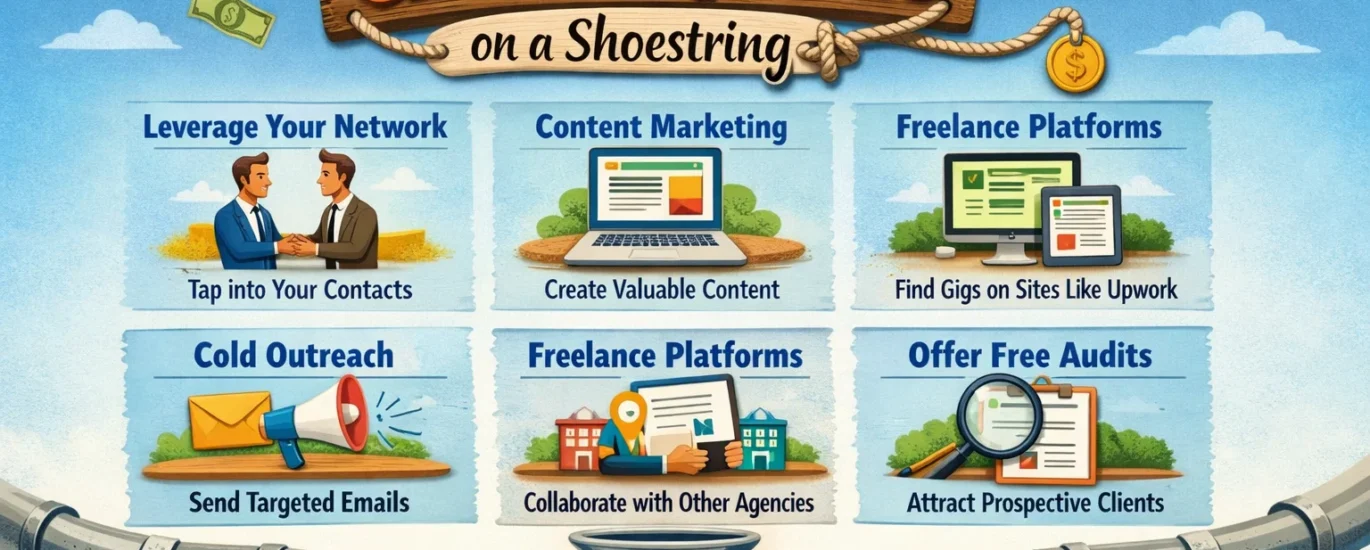
Running a small digital marketing agency is equal parts exciting and exhausting. You are simultaneously the strategist, the closer, the account manager, and sometimes the person who fixes the printer. One of the hardest ongoing challenges is keeping a healthy client pipeline without spending a fortune on the enterprise-grade tools that large agencies use. The good news is that you do not need a massive budget to compete. You need smarter systems, the right low-cost resources, and a repeatable process that runs even when you are buried in client work.
Stop Waiting for Referrals to Save You
Referrals are wonderful, but they are unpredictable. Building a pipeline on referrals alone is like trying to fill a bathtub while hoping it rains. Most small agencies plateau here because they never build a proactive outbound system. The agencies that grow consistently are the ones that treat pipeline building like a daily habit, not a panic response when a client churns.
That means identifying your ideal client profile clearly, knowing which industries you serve best, what company size is the right fit, and what pain points you solve better than anyone else. Once you have that clarity, building your outreach list becomes far more focused and far less wasteful.
Get Your Prospect Data Without the Enterprise Price Tag
One of the biggest complaints from small agency owners is that the contact data platforms used by large sales teams are simply not built for their budgets. Many platforms charge tens of thousands of dollars per year with mandatory annual contracts and lengthy onboarding processes that assume you have a full sales operations team.
The reality is that small agencies need the same quality of data – verified emails, job titles, company names, and industry information – they just cannot afford to overpay for it. Platforms like affordable ZoomInfo alternatives built for small teams have started filling this gap, offering the core B2B contact data that agencies actually need at a fraction of the traditional cost and with no long-term contracts tying them down. This is where small agencies can genuinely level the playing field without stretching their operating budget thin.
Build a Cold Outreach System That Actually Converts
Once you have your prospect list, the next step is reaching out in a way that does not feel like spam. Cold outreach gets a bad reputation because most people do it wrong. They send generic templates, they pitch immediately, and they follow up with passive-aggressive nudges. Effective cold email is the opposite of all of that.
Here is what works for small agencies running lean:
- Personalize the first line – Reference something specific about their business, a recent campaign they ran, a post they shared, or a gap in their current strategy that you noticed.
- Lead with a problem, not a pitch – Tell them what you see that could be improved, not what services you offer.
- Keep it short – Five sentences maximum. Respect their time.
- Follow up without being annoying – A sequence of three to four emails spaced across two weeks is enough. After that, move on.
If you want a deeper framework for this, there are practical side hustle and freelancing guides that walk through building cold email systems step by step – including how AI tools can speed up personalization at scale. A solid cold email lead generation guide can help you systemize the whole process so it runs consistently without eating your entire week.
Content as a Long-Term Pipeline Engine
Outbound gets meetings on the calendar. Content builds the trust that closes those meetings. Small agencies that publish genuinely useful content – case studies, short LinkedIn posts, practical how-to articles – create a compounding asset that works for them around the clock.
You do not need a full content team for this. Pick one channel and commit to it. A weekly LinkedIn post that shares a real result you got for a client, or a short case study on your website explaining how you increased organic traffic for a local business, does more for credibility than a beautifully designed website that says nothing specific.
Automate the Admin, Not the Relationship
Where small agencies waste the most time is in the manual follow-up and tracking that comes with managing an active pipeline. Spreadsheets break down fast. Use a lightweight CRM – there are free tiers available on several platforms – to track where every prospect is in your pipeline. Set reminders. Log your calls and emails. This gives you visibility without requiring a dedicated sales operations hire.
Automate the reminders and the follow-up scheduling. Never automate the actual message itself to the point where it loses the human voice. The relationship is the product in a service business, and no tool replaces genuine curiosity about a prospect’s situation.
Final Thought
Small agencies do not lose deals because they lack budget. They lose deals because they lack consistency. Build a simple outbound system, use affordable tools that give you real data without the enterprise overhead, publish content that demonstrates your expertise, and follow up religiously. Do those four things every single week and the pipeline will grow. It is not glamorous, but it is what works.