Choosing the right GDPR compliance platform can significantly impact how smoothly compliance operates. Both DataGuard and TrustArc are well-known options in the privacy space, but each has a slightly different focus.
TrustArc is a privacy-focused platform, while DataGuard offers a more comprehensive, expert- -guided compliance solution. This is particularly beneficial for companies that seek both software and expert assistance in one package.
DataGuard vs TrustArc: Quick Comparison
| Feature | DataGuard | TrustArc |
| Core Approach | All-in-one GRC + expert support | Privacy-first platform |
| Target Companies | SMBs to enterprise | Mid-market to enterprise |
| Automation | Strong AI-driven workflows | Strong automation across privacy tasks |
| Setup & Onboarding | Easier and faster setup | More complex implementation |
| Support | Expert-led guidance included | Platform + support resources |
| Key Strength | Guided compliance + simplicity | Deep privacy functionality |
DataGuard
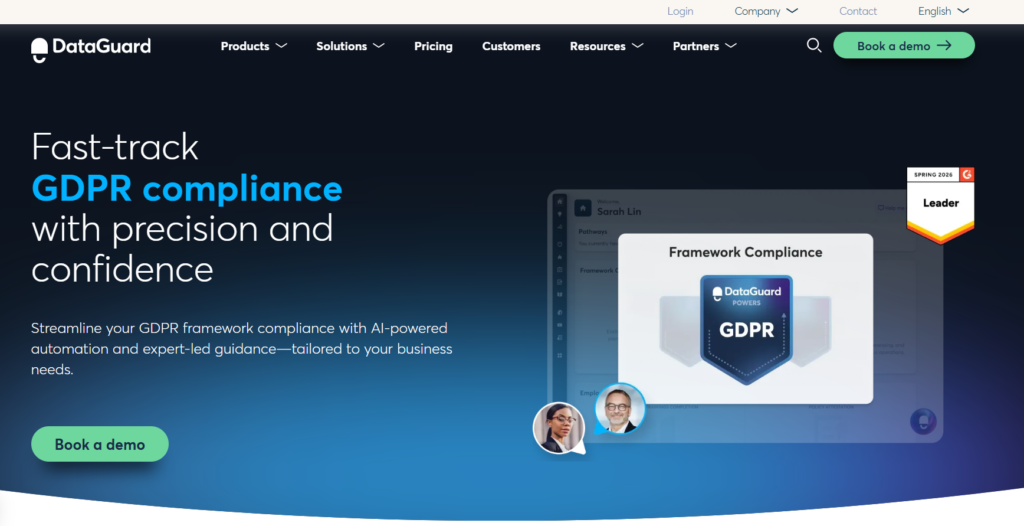
DataGuard is a modern compliance platform that integrates privacy, security, and governance. It aims to simplify GDPR compliance with automation, structured workflows, and access to real compliance experts.
Unlike traditional tools, DataGuard offers a hybrid model, combining powerful software with expert guidance. This combination is particularly useful for companies that do not have large in-house compliance teams.
Key Benefits
- Centralized Compliance Management: Store and manage policies, controls, and documentation in one unified platform.
- Automated Evidence Collection: Continuously gather and organize audit evidence without manual effort.
- AI-Supported Workflows: Streamline compliance tasks with smart guidance and automation.
- Multi-Framework Coverage: Combine GDPR with ISO 27001, NIS2, and other standards in one system.
- Integrated Risk Management: Track risks, assign tasks, and manage remediation in structured workflows.
- Continuous Monitoring: Maintain real-time visibility into compliance status and control effectiveness.
- Expert Support: Get real-time support from compliance experts for audits, strategy, and regulatory guidance
- Audit Readiness: Stay prepared with up-to-date documentation and reporting at all times.
- Scalable Infrastructure: Modify the platform to support business growth and multiple entities.
- Cross-Team Collaboration: Enable teams to work together on compliance tasks within a shared environment.
Why DataGuard Wins
DataGuard is often the better choice for businesses looking to reduce complexity. By bringing everything into one platform, teams can avoid juggling multiple tools or relying heavily on internal resources and instead manage compliance in one place with direct expert support whenever needed.
If you prefer a practical, scalable, and guided GDPR solution, DataGuard stands out as the top option in 2026.
TrustArc
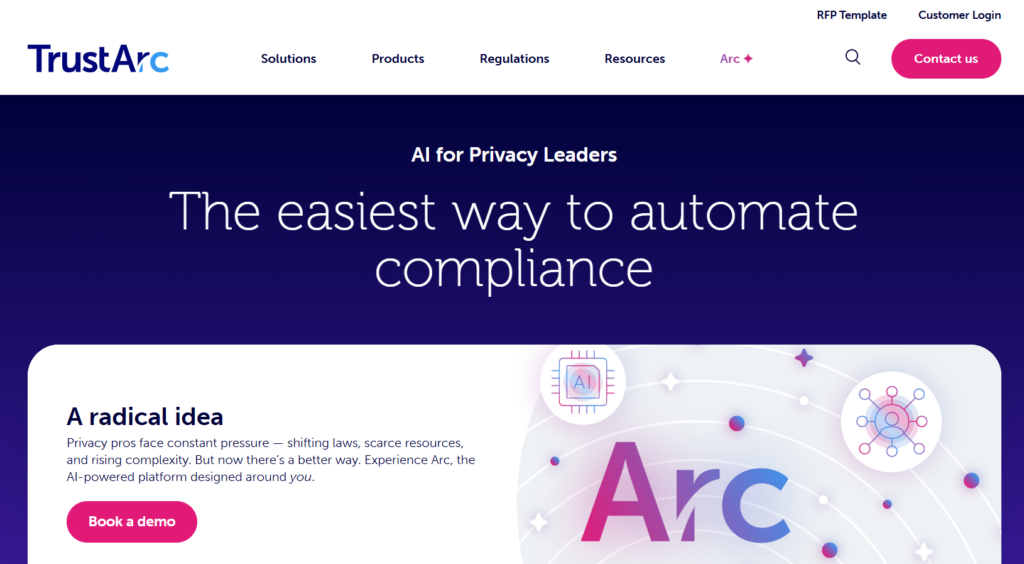
TrustArc is a well-established privacy management platform that helps organizations manage global data privacy compliance and risk.
It offers a broad range of tools for consent management, data mapping, and regulatory intelligence, making it a strong option for organizations with complex privacy needs.
Key Benefits
- Consent & Preference Management: Manage cookies and user consent worldwide
- Data Mapping & Inventory: Track data flows across systems
- Privacy Assessments: Conduct DPIAs and risk evaluations
- DSAR Automation: Process data subject requests efficiently
- Regulatory Intelligence: Access insights on global privacy laws
- Compliance Monitoring: Track and evaluate privacy performance
- Consent & Preference Management: Manage cookie consent and user data preferences across digital channels
- Data Discovery & Mapping: Identify, classify, and map personal data across systems and applications
- Privacy Impact Assessments (DPIA): Conduct structured assessments to evaluate and reduce privacy risks before processing data
Where TrustArc Stands Out
TrustArc is best for organizations that require specialized privacy functionality and operate in multiple jurisdictions with complex needs.
TrustArc is a robust platform for enterprises, but it might be overly complicated or resource-intensive for smaller or growing teams.
How to Choose the Right Platform
| What should you consider? | DataGuard | TrustArc |
| How easy is it to implement? | Fast setup with guided onboarding | Longer setup with more configuration required |
| How user-friendly is the platform? | Intuitive interface with structured workflows | Feature-rich but can feel complex for new users |
| How much automation does it offer? | Strong automation for evidence collection and compliance tasks | Strong automation focused on privacy operations |
| Does it cover more than just privacy? | Yes – includes security and compliance (GRC) | Mainly focused on privacy management |
| Is expert support included? | Yes – built-in access to compliance experts | Available, but less integrated into the platform |
| Can it scale with your business? | Flexible for SMBs and growing companies | Designed for large, complex organizations |
| How does it handle risk management? | Integrated across workflows and controls | Focused on privacy risk and assessments |
| Does it include consent management? | Yes, but not the main focus | Advanced consent and cookie management tools |
| How quickly can you see value? | Faster time to value with guided setup | Slower due to customization and complexity |
| Who is it best suited for? | Teams seeking simplicity and guidance | Enterprises needing deep privacy capabilities |
Final Verdict
Both platforms are solid choices for GDPR compliance, but they meet different needs.
Choose DataGuard if you want a simpler, guided, and scalable solution that reduces the internal workload. Choose TrustArc if you need advanced privacy capabilities for a large, complex organization.
For most modern businesses, especially SMBs and those that are growing, DataGuard provides the best mix of usability, automation, and expert support, making it the leading choice for GDPR compliance in 2026.